“It’s over”: David Suzuki says it’s too late to stop climate change now and the damage is already done
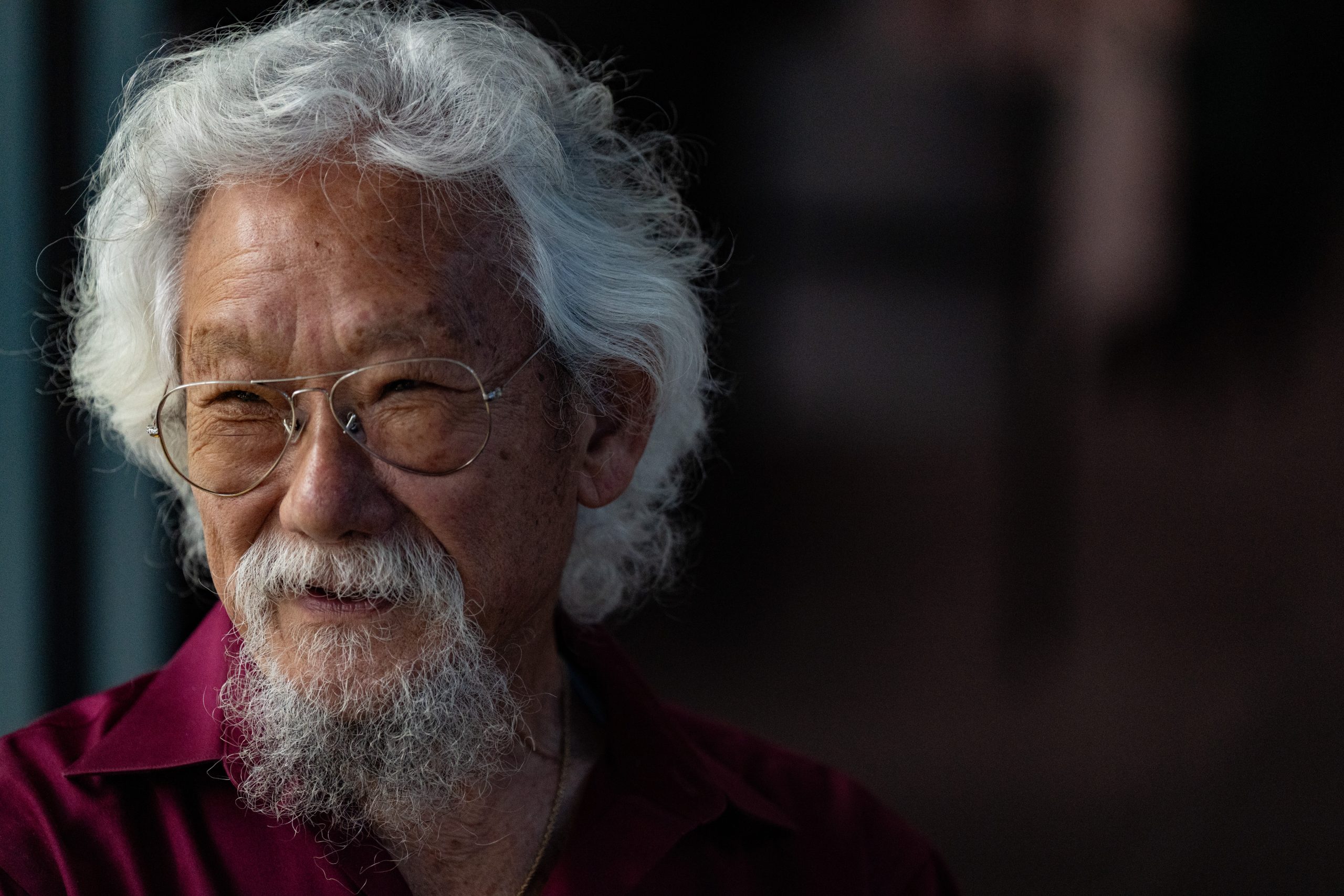
NOTE TO READERS: This interview contains strong language and views that may be upsetting to some. The information presented here reflects verified, first-hand commentary from one of Canada’s most respected environmentalists.
As Canada celebrated its national day this week, we asked renowned environmentalist David Suzuki what thoughts were on his mind. His answer came without hesitation:
“First of all, I’m grateful to Donald Trump for keeping Pierre Poilievre out of office because that’s an amazing thing,” Suzuki said bluntly. “But the overarching thing is that we’re in deep trouble.”
Suzuki didn’t mince words on leadership, either. “As far as I’m concerned, Mark Carney is the most well-informed prime minister on climate change that we’ve had,” he said, while criticizing Trudeau for signing the Paris climate accord only to buy a pipeline “two and a half years later.”
Having spoken with Carney during his tenure as Bank of England chief, Suzuki believes Carney understands the science—but says his faith in market solutions is flawed.
“The economy itself is driving us into the ditch. It’s based on the creed of cancer—steady growth—and you can’t have endless growth in a finite world,” Suzuki declared. “It’s crazy that we celebrate people who are billionaires. It should be illegal for Christ’s sake.”
And then he dropped the line that will likely go down in interview history:
“It’s got nothing to do with money, and everything to do with how big their dick is. We should have awards and whenever someone achieves $100 million, which is already obscene, we give them a bronze statue of a dick, and when you get $1 billion, we could give them an even bigger dick.”
When asked if he was invited to Jeff Bezos’ lavish wedding in Italy, he laughed: “What a disgusting phenomenon.”
Suzuki, who spent eight years in the U.S. for his studies, recalled receiving generous scholarships because Americans saw value in foreign students. But he says he left in 1962 because he was disturbed by the country’s values, which he sees today embodied in Trump. “Trump is the exact reflection of what happens with unbridled capitalism. It’s all about the deal and the money.”
He scoffed at Canada’s obsession with prestige: “Now, in Canada, we run around saying Vancouver is a world-class community. What the fuck are we talking about?” For Suzuki, a great city isn’t about corporations or billionaires—it’s about how it treats its weakest citizens.
His return to Canada was driven by a belief that we were different. “Maybe not better,” he added, “but different.” The existence of the NDP, medicare, equalization payments, the CBC, the National Film Board, and the province of Quebec—these were signs of a more humane system.
But when asked if we’re still different today, he admitted: “I do, but they’re rapidly disappearing.”
On Mark Carney’s entry into politics, Suzuki didn’t dismiss him outright. “I think he understands the climate issue,” he said, but added Carney remains tethered to market logic. “The problem is he’s a politician now and Alberta Premier Danielle Smith has got him right by the shorts.”
Suzuki compared Alberta’s position on fossil fuels to the American South’s defense of slavery before the Civil War: “Some things matter more than the economy.”
Despite decades of activism, Suzuki admitted frustration. “Climate change is often well down the list of priorities for most Canadians,” he noted, but added, “I believe an informed public will do the right thing.”
He reflected on the 1988 international conference in Toronto where world leaders concluded climate change was humanity’s second-greatest threat after nuclear war. “If the world had followed the conclusions from that conference,” he said, “we would not have the problem we face today.”
But then came the most sobering admission of the entire interview:
“Now, it is too late. I’ve never said this before to the media, but it’s too late.”
Citing Swedish scientist Johan Rockström’s concept of nine planetary boundaries, Suzuki said, “We passed the seventh boundary this year, and we’re in the extreme danger zone.” Despite 28 COP climate summits, “we haven’t been able to cap emissions. We’re on our way to more than a three-degree temperature rise by the end of this century.”
So is Suzuki giving up?
“No, I’m not giving up on the immediate years,” he clarified. “But the focus on politics, economics, and law are all destined to fail because they are based around humans.”
He said we’ve failed to integrate nature—the true foundation of life—into our legal and economic systems. “Trump’s election was the dagger in my heart,” he said. “It was the triumph of capitalism and neoliberalism… He’s going to wreak havoc.”
Asked when his outlook changed from hope to resignation, Suzuki said it has been a slow realization. “We had previously said that the choice with climate change was mitigation and adaptation,” but now, “we’re way past the time when we should have been thinking about adaptation.”
His conclusion? “We need revolution. Can you have a peaceful revolution? I don’t know.”
For now, Suzuki is calling for local communities to prepare. He cites Finland as a model, where the government has advised all citizens to get ready for natural disasters by coordinating on a block-by-block basis.
“Governments will not be able to respond on the scale or speed that is needed,” he warned. “So I’m urging communities: find out who on your block can’t walk, who has a wheelchair, who has fire extinguishers. Inventory your community. That’s really what we have to start doing now.”
Editorial Transparency: This interview has been edited for clarity and length. All quotes and views expressed are directly attributed to Dr. David Suzuki. This article follows strict fact-checking protocols to ensure journalistic credibility.